Why Your Front Door Matters More Than You Think
Your front door is the handshake of your home. It’s the first thing guests see when they arrive and the last barrier between your family and the outside world when you lock up at night. For decades, homeowners were forced to choose between the classic charm of timber, which often warped or rotted, and the sterile practicality of uPVC, which didn’t always offer the aesthetic warmth people craved.
Enter the composite door. It has quietly become the gold standard for modern entryways, not just because it looks good, but because it is engineered to solve the specific weaknesses of its predecessors. If you have been wondering whether upgrading your entrance is worth the investment, understanding the construction and security mechanics of composite doors is the perfect place to start.
What Exactly is a Composite Door?
The name “composite” gives the game away, it is composed of multiple materials. Unlike a solid wood door made from a single slab of timber or a uPVC door made largely of plastic, a composite door is a sandwich of high-tech materials pressed together under immense pressure.
At the core, you usually have a solid timber section or a high-density polyurethane foam. This core is what gives the door its incredible strength and thermal efficiency. Surrounding this core is a durable frame, often reinforced with galvanized steel. Finally, the outer skin is typically made from Glass Reinforced Plastic (GRP), the same tough material used to make fishing boat hulls.
This combination creates a door that has the weight and feel of solid wood but is completely impervious to the weather. It won’t swell in a rainy British winter, and it won’t fade or crack in the summer sun.
Unmatched Security Features
The primary value driver for most homeowners switching to composite is security. A standard wooden door has natural weak points, knots in the wood or areas where the grain is thinner. A hollow uPVC door can sometimes be kicked through with enough force. A composite door, however, is a fortress.
The “Sledgehammer Test”
Imagine a standard uPVC door panel. If an intruder takes a sledgehammer to it, the plastic can crack and shatter relatively quickly. Now apply that same force to a composite door. Because of the high-density core and the GRP skin, the impact is absorbed and dispersed. The door might dent, but breaking through it is exceptionally difficult and noisy, two things’ burglars hate.
This structural integrity serves as the foundation for the hardware. You can have the best lock in the world, but if the door frame splits under pressure, the lock is useless. Composite doors provide a rock-solid anchor for multi-point locking systems.
The Magic of Multi-Point Locking
Most composite doors come standard with multi-point locking mechanisms. When you lift the handle, you aren’t just engaging a single deadbolt near your waist. You are engaging a series of hooks and bolts that secure the door to the frame at the top, middle, and bottom simultaneously.
This distributes the force of any attack. If a burglar tries to crowbar the bottom corner, the top hook holds firm. If they try the top, the bottom bolt resists. This “claw” effect essentially welds the door to the frame, making it incredibly resistant to forced entry.
To maximize this security, many manufacturers pair these mechanisms with anti-snap, anti-pick, and anti-drill cylinders. Cylinder snapping is a common method used by intruders where they snap the protruding lock cylinder to manipulate the mechanism inside. High-quality composite setups use cylinders designed to break in a specific “sacrificial” spot that leaves the locking mechanism intact and the intruder locked out.
Thermal Efficiency: Saving Money While Staying Safe
While security is paramount, the value of a composite door also hits your wallet in a positive way. We lose a significant amount of heat through our doors and windows. Traditional timber doors are notorious for drafts; as wood expands and contracts with humidity, gaps appear around the frame.
Composite doors are designed with thermal breaks. The foam core acts as a high-performance insulator, trapping warm air inside your home and keeping the cold air out. In fact, a high-quality composite door can be up to six times more thermally efficient than a standard timber door.
This means your hallway doesn’t become an icebox in January. It reduces the load on your central heating system, which over the lifespan of the door (often 30 years or more), can add up to significant savings on energy bills. It’s a passive way to improve your home’s energy rating without changing your lifestyle.
Aesthetic Versatility
One of the biggest hurdles for security upgrades is that “secure” often looks “industrial.” Nobody wants their home to look like a bank vault. This is where the GRP skin shines.
During the manufacturing process, the GRP skin can be moulded with a woodgrain effect. This isn’t just a printed pattern; it has the actual texture of wood grain. You can run your hand over it and feel the ridges, mimicking oak or rosewood perfectly.
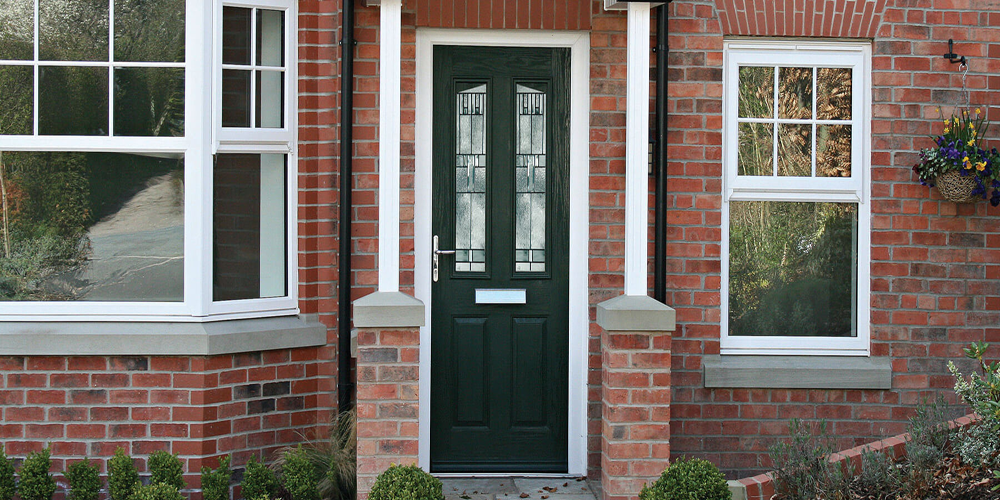
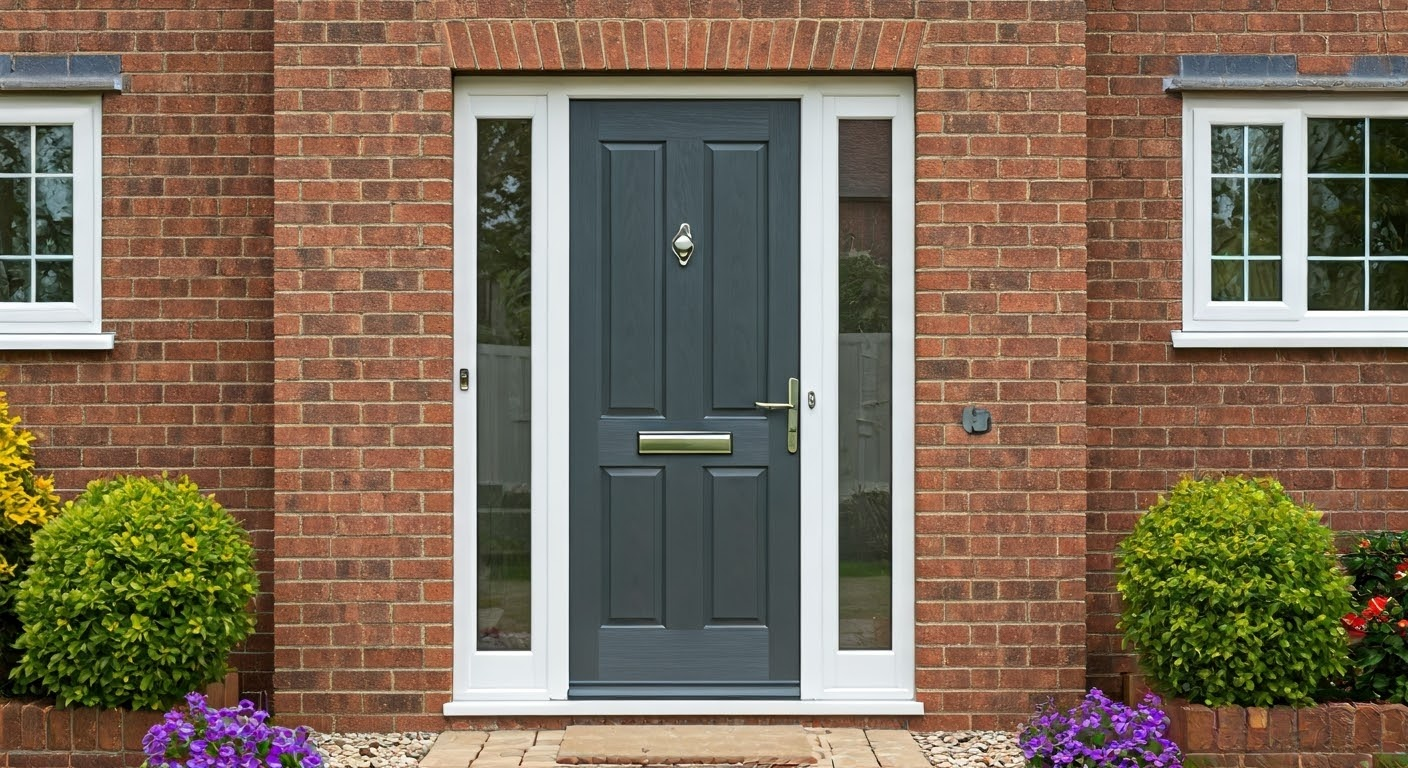
Because the colour is bonded into the material rather than painted on top, it is incredibly resistant to scratches and flakes. Whether you want a Chartwell Green for a cottage vibe, an Anthracite Grey for a modern architectural look, or a classic Poppy Red to make a statement, the finish remains vibrant with nothing more than an occasional wipe down with soapy water.
Low Maintenance Living
We live in a busy world, and the last thing anyone wants is to spend their weekend sanding and repainting a front door. Timber doors require a maintenance cycle, sanding, priming, painting, and varnishing, every few years to stop rot from setting in.
Composite doors are virtually maintenance-free. They do not rot, rust, peel, or warp. The hinges might need a drop of oil once a year, and the surface might need a wipe to remove dust or splashes, but that is it. This longevity is a huge part of their value proposition. When you calculate the cost of paint, varnish, and your own labour over two decades, the slightly higher upfront cost of a composite door often turns out to be cheaper in the long run.
Weatherproofing for the Worst Days
Living in an area prone to driving rain or coastal winds requires a door that seals tight. Composite doors are fitted with high-performance weather gaskets, rubber seals that compress when the door is locked.
Because the door slab doesn’t warp, these seals maintain their integrity year after year. With a timber door, a slight warp can lift the wood away from the seal, letting water trickle in during a storm. The dimensional stability of composite materials ensures that the seal you have on day one is the seal you have on day 1,000.
Adding Value to Your Property
Finally, let’s talk about resale value. Curb appeal is a real estate buzzword for a reason. Buyers make up their minds about a property within seconds of walking up the driveway. A tired, peeling front door suggests a house that hasn’t been cared for. A robust, stylish composite door suggests security, warmth, and modernity.
It is a subtle psychological cue. If the front door is solid and high-quality, the buyer subconsciously assumes the rest of the house is well-maintained. It acts as a trust signal. Furthermore, in an era where energy efficiency ratings (EPCs) are scrutinized by buyers, having a thermally efficient door contributes to a better overall score for the property.
An Investment, Not an Expense
When you weigh the pros and cons, the composite door stands out as a clear winner for the modern homeowner. It bridges the gap between the beauty of the past and the technology of the future.
It offers peace of mind through superior resistance to brute force attacks and intelligent locking systems. It offers comfort through excellent thermal insulation. And perhaps most importantly, it offers time, time saved on maintenance that you can spend enjoying your home rather than working on it.
While the initial price tag is higher than a basic uPVC option, the dividends it pays in security, style, and energy savings make it one of the smartest upgrades you can make for your home.